

Shorthand
Last weekend, I found myself in a rousing group text conversation with a couple of friends about the favor economy. One friend shared that she and her partner were thinking about updating their will because the guardian they had in mind, should something happen to them, would not be willing to leave her community of friends to care for my friend’s son. The intended guardian noted that in her shrewd, parentless observation, the way to “reduced-stress parenting” was to have a community of friends and family nearby that could help with childcare in a pinch. Leaving her city for this city to care for a child who would have lost both parents without the support of her village was not exactly what she signed up for.

Nico and I talking to Nick on FaceTime while he was in Atlanta last week.
Shortly after, I shared that I had seen an IG Reel of Vivian Tu, Your Rich BFF, talking about the favor economy. She talked about how the shift from relying on each other to being independent is making us broke. Before innovations in convenience like Uber, Instacart, and TaskRabbit entered our lives, we used to ask each other for help. Now, we don’t. And with that, the concept of “community” or “it takes a village” languishes. Her lightbulb moment on how to combat the perils of individualism was a quote she heard that said, “If you want to live and be supported by a village, you need to be a villager.”
I personally know no other way to be but a villager.
During the text exchange with my two friends, I shared how one of our kids was about to go play upstairs at the neighbor’s house because his siblings had other plans and he didn’t want to go with Nick to the store. Having that alternative place to be is what I consider having a village. But that village didn’t just come; it was cultivated. Being a villager means you have to be willing to be uncomfortable and inconvenienced at the expense of a neighbor, friend, and even family member. In the case of my neighbor’s child, they have been to our house more times than I can count. Their presence was never an inconvenience, but the noise levels that came with additional kids being in our apartment and the mess that was left after many a playdate certainly was. But it’s worth it. I’ll endure any inconvenience for our children to build their own communities. In turn, my neighbor’s door is always open if we need it because we have hosted their child so many times.

Group picture of my Goldman Sachs 10,000 Small Business class with our guest speaker for the day Mori Taheripour, a negotiation expert who focuses on human connections and bringing authentic selves to conversations. Read her book “Bring Yourself.” She’s amazing.
To build a village, you must be willing to be inconvenienced by other villagers.
Just a couple of weeks ago, I got an inconvenient text. It was from one of my best friends asking if her girls could sleep over on Friday night because she and her husband would be out of town for work until Saturday. Now, when I got the text, I was doggy paddling in my swim called life. I knew the weekend would be focused on finishing my final project for the Goldman Sachs program, cleaning and vacating the apartment for our weekly constitutional open house, and managing my own childcare needs since Nick was taking his own work trip to Atlanta to do some ice cream consulting for a new ice cream brand. I responded to her message, “I guess. We’ll figure it out. Nick is out of town Thurs–Saturday.” My message was neither an enthusiastic yes nor was it a no.
It was shorthand for: “This is 100% inconvenient but of course. I’ve got you.”
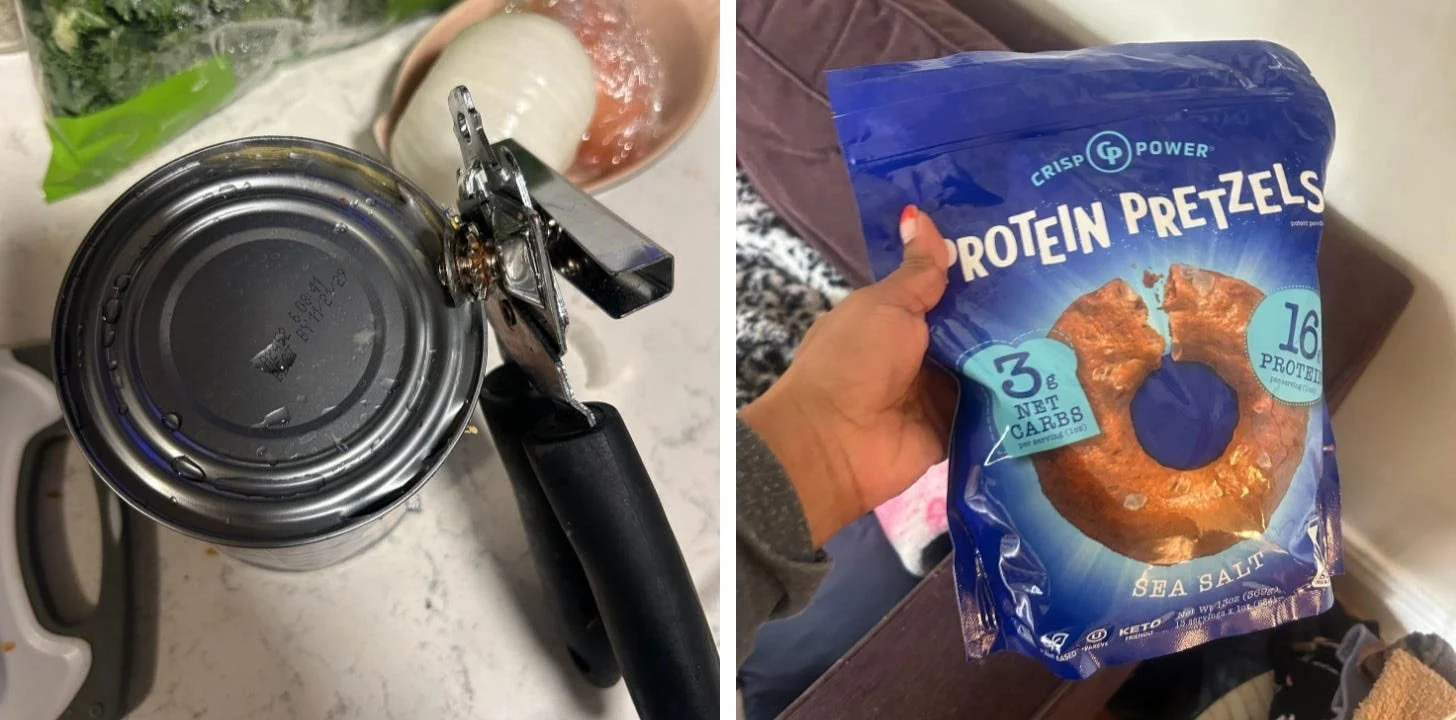
The last two pictures I sent to the Whatsapp Group for our apartment building. The first was a cry for help because our can opener stopped opening cans right at the moment that I need it to. The second image was an offering of an unopened bag of high protein pretzels that my mom sent. No one really took to the first bag so I asked if anyone wanted this unopened bag. I started our Whatsapp group primarily so that we neighbors could easily ask for and help with favors like this.
We all need shorthand friends in our lives—people that we can send the smoke signal to without pretext and know that they’ll come to our aid. These people are the people that make up our village. But just like in any ecosystem or economy, there has to be a give and take. You can’t always send up the smoke signal and never be the person rescuing. Reciprocity is key.
If you want a village, be a villager. Ask for help when you need it and give it when you can. Don’t take more than you give.
As we close out 2025 and prepare ourselves for a new year, I hope you’ll consider the idea of cultivating more shorthand friends—these are the people who have our back no matter how inconvenient.
Petrushka
Your Local Ice Cream Lady & Life/Business Coach
P.S. Consider sharing this message with your shorthand friend(s) to let them know you see and appreciate them. <3