

Homesteading
This week's email is my first real attempt at putting language to something I've felt for years. I know I haven't captured all of it yet. What would you add to the definition? Tell me in the comments.
I never wanted to be a full-time stay-at-home mom. I wanted the opportunity to cosplay one. I wanted to volunteer at the kids’ schools and take them to the playground without the stress or pressure of my boss checking on me. But, I didn’t want 100% of my life to be consumed by theirs. I also wanted to cultivate my own interests on my own time, which in this case was to start and grow a business.
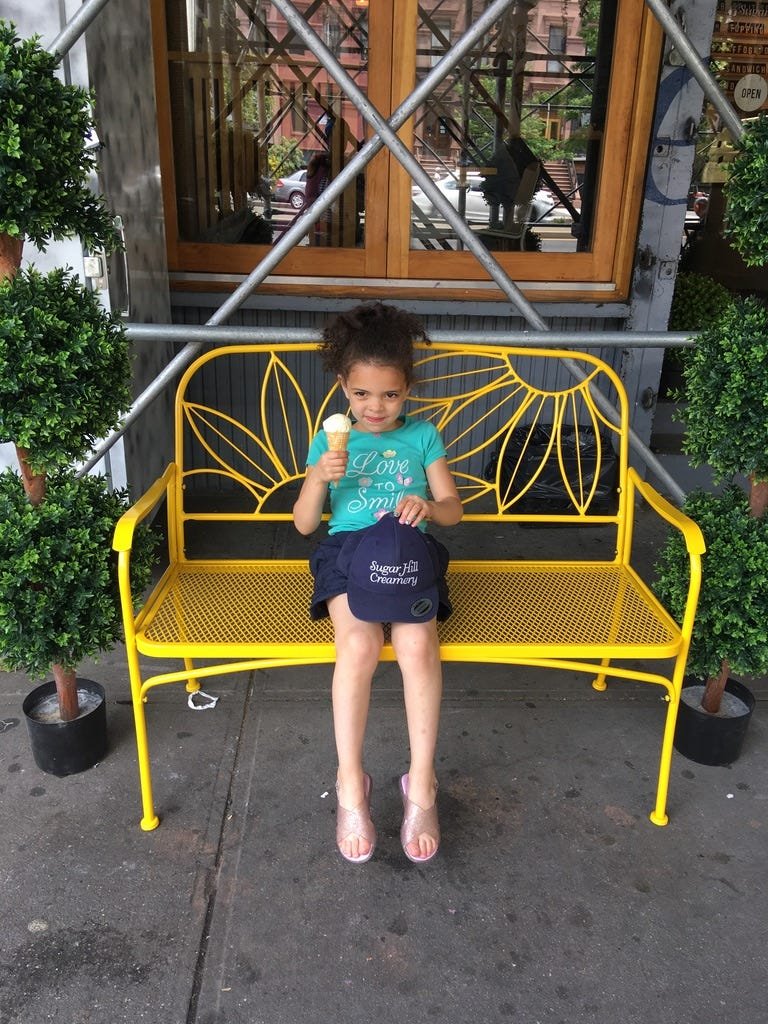
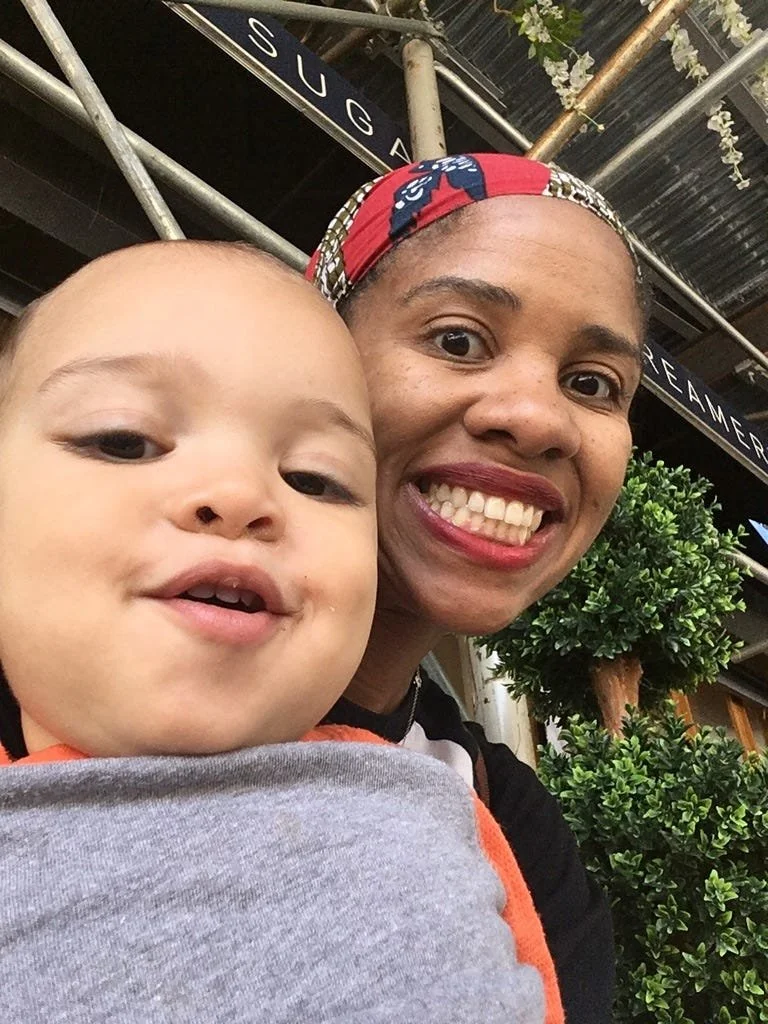
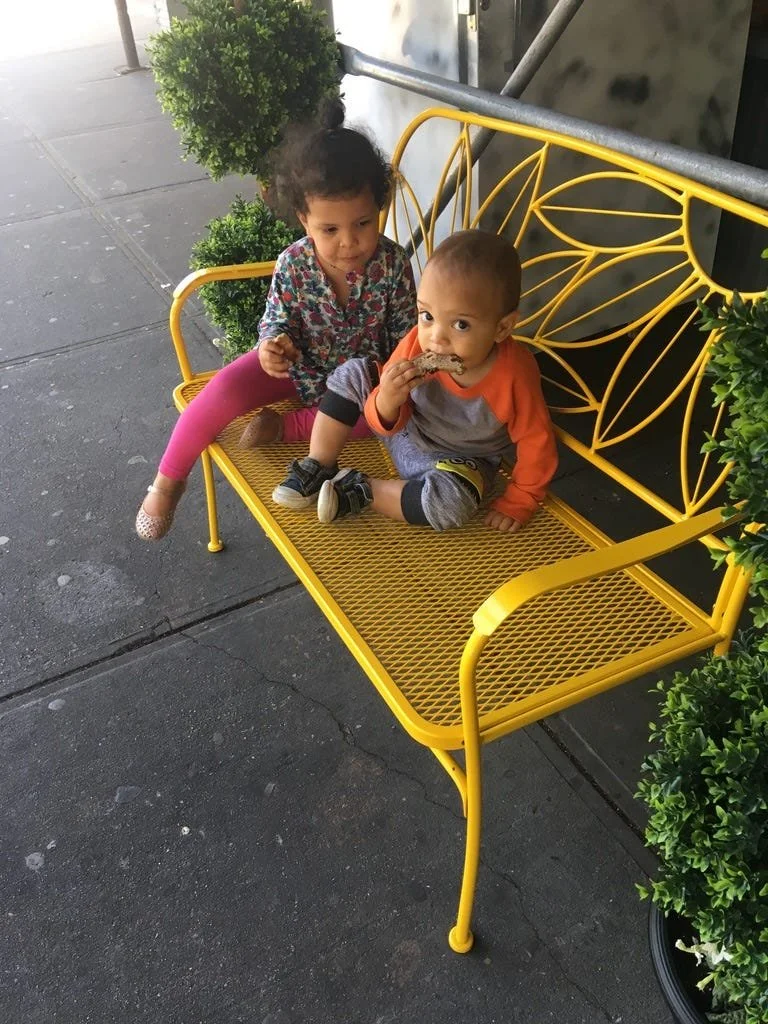
Images: Pictures from June 2019 of the kids and me in front of the store on Lenox Ave
At the beginning of Sugar Hill Creamery, I felt like my time was best used establishing the bonds with our children that I knew would be the foundation of our relationships as they grew. For me, this meant I needed to be physically, and of course emotionally, present with them.
Based on our previous work experience and these reasons, Nick and I decided he would manage the front and back of house and I would do the marketing and business development and admin. This meant he left every day to be a part of and oversee the production of our ice cream while also managing our scoopers. My scope of work allowed me to be anywhere–from a playground bench to our home office–while tending to the care and well-being of our kids, a lifestyle I had wanted since our first child was born in 2012, and that I did not lose sight of when I was pregnant with our second in 2015. Nick’s scope allowed him to tap into all of his culinary school training and past experience serving and managing staff on a dining room floor. And mine allowed me to use my executive leadership experience while tending to the emotional gardens of our children.
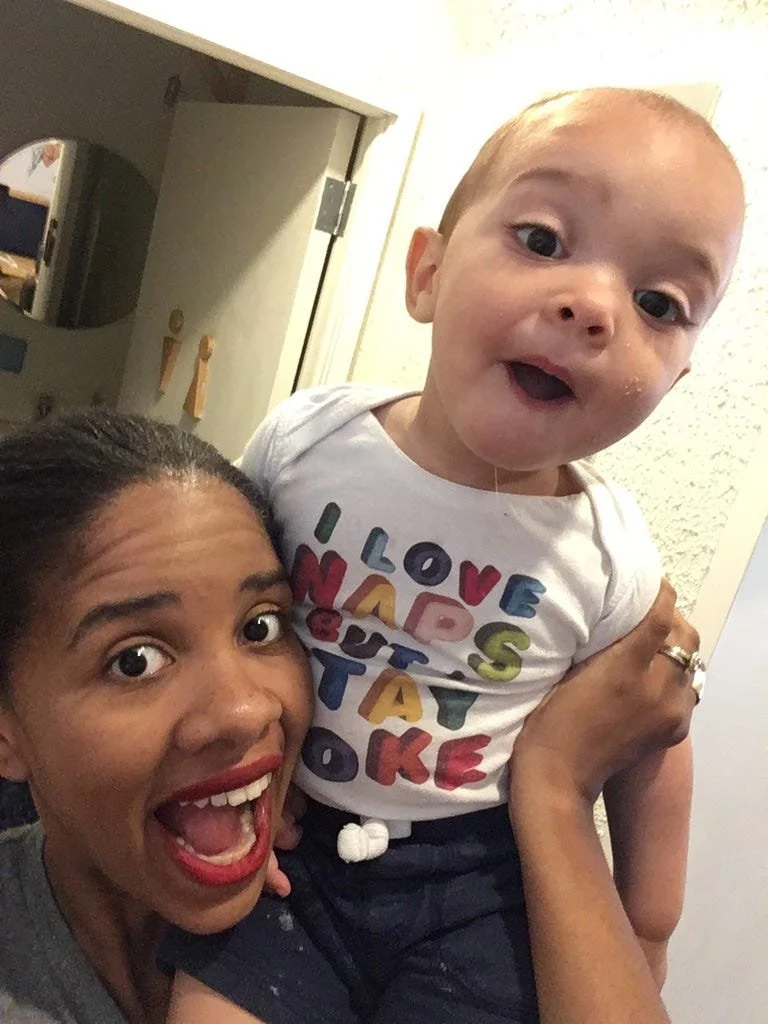
Image: Nico and I at the store on Lenox Ave in June 2019
Taking care of our kids and shaping their character while connecting with them as we started and grew this business in our neighborhood that says hello to me as soon as I walk out of our pre-war apartment building and where I get to chat with friends, neighbors, and customers as I run errands along Lenox Ave, was my version of homesteading. It wasn’t homesteading in the traditional sense. If you know me, you know that I do not have a green thumb. It was homesteading for my soul, the longitudinal health of my immediate family, and ultimately my community.
Conventionally, homesteading is about tapping into self-reliance and resourcefulness to eat and live using what is available to you. It’s about connecting to the land to build a life that provides you with food and shelter. My version of homesteading–Homesteading in Harlem–was about doing these things but through relationship building both at home and in our neighborhood.
The purpose of conventional homesteading is individual provision and self-preservation, while my version hinges on providing for more than oneself. What this looks like for me is speaking to my neighbors, building networks of mutual aid to exchange material and information-based resources, giving generously whenever possible, and never taking more than I give.
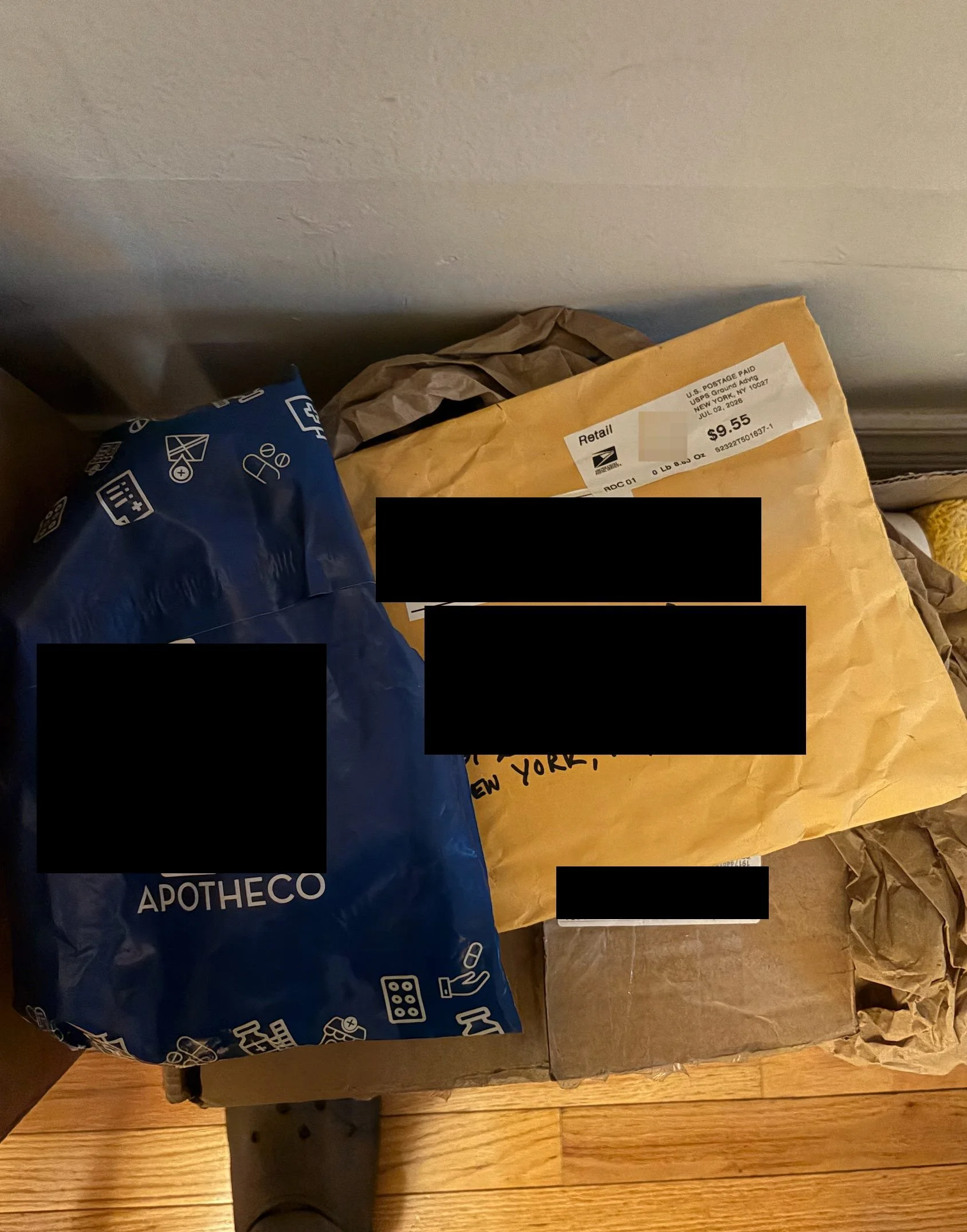
Image: I sent a picture of these packages to one of next door neighbors after seeing that they had been sitting outside of their place for a couple of days. Without prompting, I told them I’d hold the packages until they got home. Offering to look out for someone else’s well being without them asking is a form of mutual aid in my book.
And, this kind of homesteading is more spiritual. Homesteading in an urban setting without the focus of growing and canning produce and tending to livestock focuses on how one builds an ecosystem that supports the builder and anyone who is a part of it. Homesteading in a city involves mutual aid, a love of one’s neighbors, and a commitment to bringing people together across differences.
I find so many parallels between conventional homesteading and what we have been doing–Nick and I used the resources available to us to open. We were a bit undercapitalized, but we made it work. We lived off a modest salary ($30,000 to be exact) for the first few years because that’s all the business could bear to support us and all of the other employees and bills we had to pay. Growing Sugar Hill Creamery felt (and still does feel) like farming–neither the land nor the business cares if you feel sick when something needs your attention. The show must go on. The parallels in physical labor are there, too. We carry heavy buckets of ice cream out of our production facility and into our stores like farmers carry 40- and 50-pound bags of feed. Running this operation requires real physical work.
But to me, creating jobs for people young and old and seats for our customers to sit and enjoy the company of each other for $5.75 plus tax, the price of a single scoop of chef-inspired, small-batch ice cream in a cup, all falls into my homesteading matrix. Being a place where currency is exchanged to support more than its founders and space is given to others to sit for as long as they want in a city where the price to live, eat, and drink per square foot outpaces that of almost every other city in this country, is in itself a form of mutual aid and what my version of homesteading means.
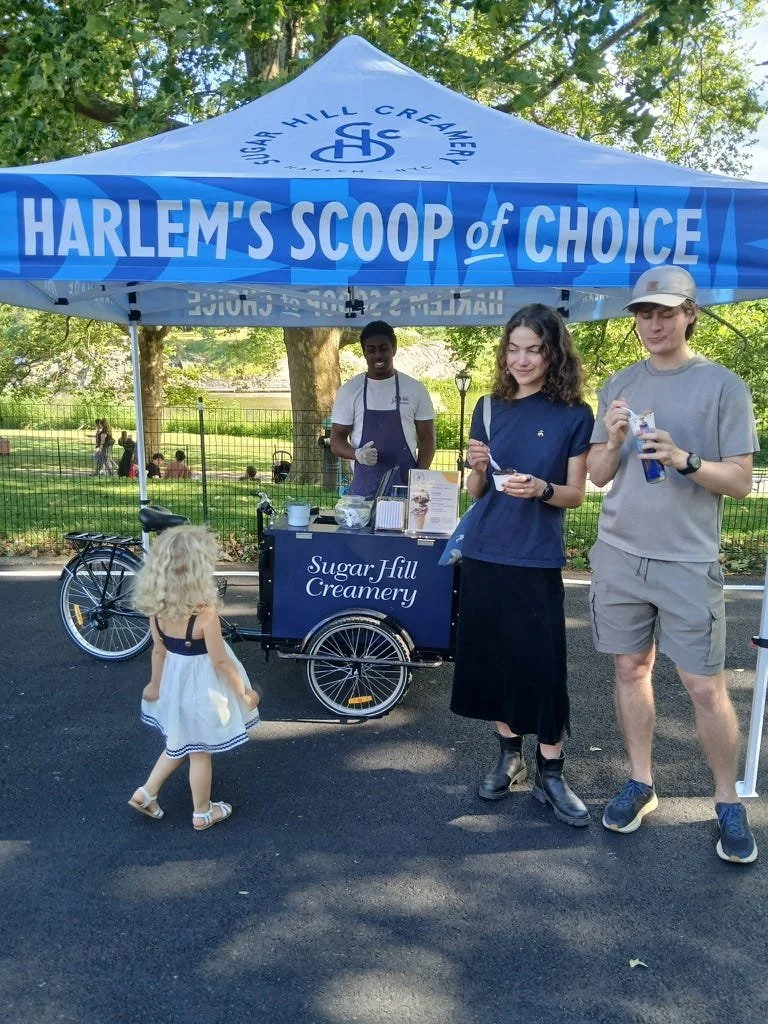
Image: One of our scoopers with a family who stopped by for ice cream a couple of Saturdays ago at Unity Market—a new farmer’s market where you can find us on 110th & Lenox Ave, at the entrance of Central Park North
Being able to raise my children so that I can know them while offering invitations for people to more deeply connect with themselves, with each other, and with the people of this community through the third space of our stores has been my guiding light.
This is urban homesteading, a concept that I think we city dwellers must latch on to. I wanted to share these ideas because this business has always been more than it appears to be. I have always regarded our discipline around it as a form of homesteading, and this week’s missive is an attempt to define what exactly I mean by it.
Cities outlive empires, and collectives outlive individuals. Sugar Hill Creamery is not just an ice cream shop; we are an instrument, and hopefully an example, for these concepts to play out every day.
Petrushka
Your Local Ice Cream Lady & Life/Business Coach